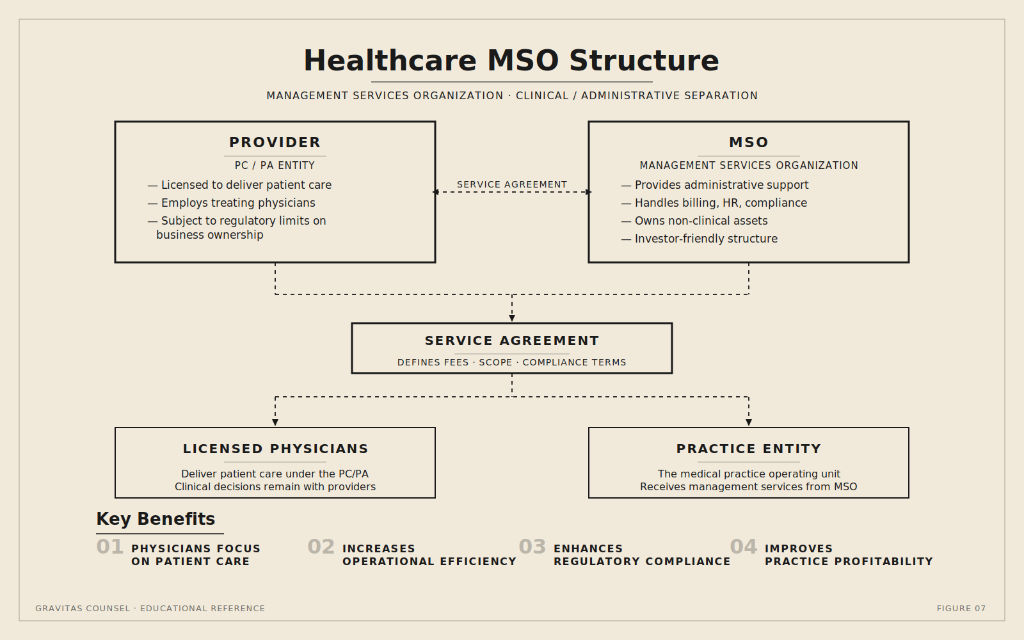
Healthcare MSO Structure
A regulatory workaround that lets investors own a medical business without violating the corporate practice of medicine doctrine. Clinical decisions stay with physicians. Business operations flow to a separate investor-friendly entity.
Management Services Organization · Clinical / Administrative Separation
Many states prohibit non-physicians from owning or controlling medical practices (the "corporate practice of medicine" doctrine). The MSO structure separates the clinical entity from the business entity to comply with those rules. Licensed physicians own and control the clinical practice. A management services organization, which may be owned by investors, provides the administrative, operational, and financial services the practice needs to operate.
The MSO structure is what makes modern healthcare consolidation possible. Without it, private equity could not invest in dermatology, dental, ophthalmology, urgent care, or any of the other specialty roll-ups that now dominate outpatient medicine. The structure lets investors capture operational economics while physicians retain clinical autonomy.
The structures described here are architectural patterns that require careful customization to the specific facts of each client, jurisdiction, and set of planning objectives. These diagrams and summaries exist to build vocabulary and pattern recognition, not to substitute for qualified counsel.