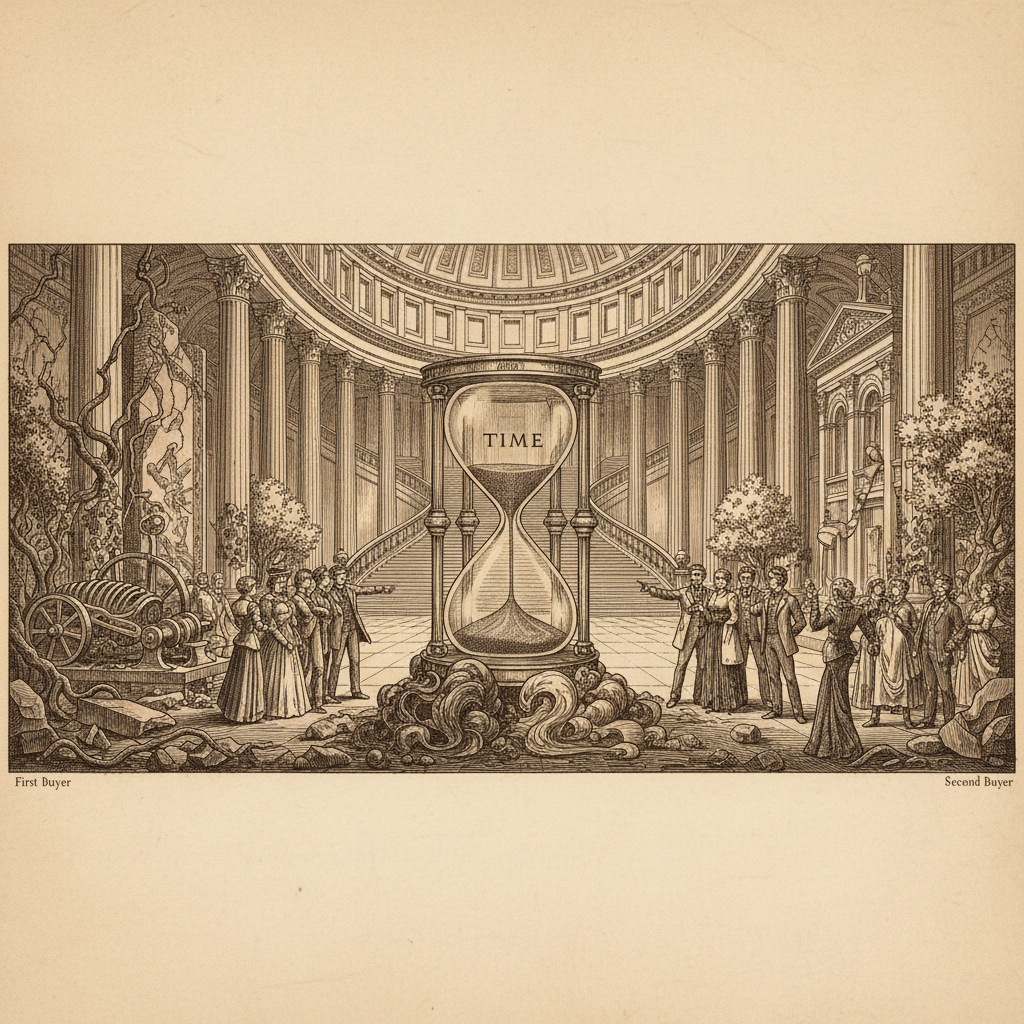
Two Numbers, One Confusion
Every business owner who has ever thought about selling has a number in their head.
Sometimes it came from a broker who gave them a quick multiple of EBITDA. Sometimes from a friend who sold a business in the same industry three years ago. Sometimes it's a number they arrived at themselves; what they need to retire, multiplied back into what the business would have to sell for.
That number is a valuation. It is not a price.
The gap between them is where most exits go wrong.
What Valuation Actually Is
Valuation is an analytical exercise. It applies a methodology, discounted cash flow, comparable transactions, precedent multiples, to a set of financial inputs and produces a range of defensible numbers. It's the answer to the question: what should this business be worth?
Done well, it accounts for your industry, your growth profile, your margin structure, your customer concentration, and the quality of your earnings. Done by a competent advisor, it produces a range that any serious buyer would recognize as grounded.
But valuation doesn't make the phone ring. It doesn't create competing offers. It doesn't give you the ability to walk away from a bad deal.
That's what process does.
What Price Actually Is
Price is what a specific buyer pays on a specific day in a specific market environment, under a specific set of competitive pressures.
It is determined by:
Market conditions. Multiples in the lower middle market compress when credit tightens and expand when it loosens. The same business that would have sold for 7x EBITDA in 2021 may clear 5.5x in a different rate environment; not because the business changed, but because the financing math for PE buyers changed. You can't control the market. You can control whether you're ready when the market is favorable.
Buyer competition. The single most reliable driver of premium pricing in a private transaction is the credible presence of multiple buyers in a competitive process. Buyers behave differently when they believe they can lose a deal. They stretch on price. They reduce contingencies. They move faster. A single buyer who knows they're the only buyer does none of these things.
Information quality. Buyers price uncertainty. A business with three years of clean financials, a clear customer list, well-documented operations, and no pending litigation requires less risk premium than a business that requires six months of forensic accounting to understand. Information quality is a direct input to price; and it's entirely within the seller's control.
Your advisor's process design. How the deal is run, which buyers are contacted, in what sequence, with what materials, on what timeline, is a craft. It's not a commodity. The difference between a process that creates competition and one that doesn't is often entirely about execution.
Why the Gap Opens
The valuation-to-price gap widens most predictably in three scenarios.
First, when an owner goes to market without a formal process, accepting an unsolicited offer, or working through a single buyer without creating competitive tension. The buyer controls the price.
Second, when operational or financial issues surface in diligence that weren't disclosed or addressed before the process began. Every surprise is repricing leverage in a buyer's hands.
Third, when the seller's timeline creates pressure, a health issue, a partnership dispute, a lease expiration, that the buyer learns about. Sellers who need to close are sellers who don't negotiate.
What Closes the Gap
The owners who achieve prices that align with, or exceed, their valuation do three things consistently:
They prepare the business before the process, so there are no surprises in diligence. They run a structured process with a qualified advisor who knows how to build and sustain competitive tension. And they are genuinely willing to walk away from a deal that doesn't meet their threshold.
That last one is harder than it sounds. But it is also the condition that makes everything else work.
The number in your head may be exactly right. Getting it requires more than knowing it.
If you want to understand the gap between your current valuation and a realistic transaction price, and what it would take to close it, let's have that conversation.
Related Structures